Carpal tunnel syndrome (CTS) happens when a nerve in your wrist — the median nerve — is squeezed. This nerve gives feeling to your thumb, index, middle and part of your ring finger. It also helps some muscles move.
The nerve runs through a narrow space in the wrist called the carpal tunnel. If there is swelling or extra pressure in this tunnel, the nerve becomes trapped. This can cause tingling, numbness and weakness in your hand.

(Diagram 1: area of pain and numbness)

(Diagram 2: cross-section of the carpal tunnel showing the nerve and ligament)
Carpal tunnel syndrome can happen when there is pressure or swelling in the wrist. It may be linked to:
- Repeated hand or wrist movements
- Pregnancy (due to fluid changes)
- Health conditions such as diabetes, thyroid disease or arthritis
- A wrist injury or fracture
- No clear reason (sometimes called idiopathic CTS)
CTS is more common in:
- Adults over 40
- People who do repetitive work with their hands (such as typing or assembly work)
- Women, especially during or after pregnancy
- People with diabetes, arthritis or obesity
See a GP or other healthcare professional if:
- You often feel tingling or numbness in your fingers
- Symptoms wake you at night
- You drop things easily or feel weakness in your hand
- Symptoms are not improving with rest or splints
Early treatment can help prevent long-term nerve damage.
You may notice:
- Tingling or numbness in your thumb, index, middle and part of your ring finger
- Pain in the wrist, palm or forearm
- Weak grip or clumsiness, such as dropping objects
- Symptoms worse at night or in the morning
- Relief from shaking or rubbing your hand
A healthcare professional will:
- Ask about your symptoms and daily activities
- Examine your hand and wrist
- May do simple tests in clinic, such as bending your wrist or gently tapping over the nerve
You may also be referred for:
- Nerve conduction studies – to check how well the nerve is working
- Less often, an ultrasound or MRI scan
Nerve tests are not always needed if the diagnosis is clear and symptoms are typical.
Overview
Most people get better with simple treatments. Surgery is offered if symptoms are severe or do not improve.
Conservative treatment aims to reduce pressure on the nerve and improve symptoms. This may be started by a GP, first contact practitioner (FCP), or other healthcare professional.
This can include:
- Resting your wrist from repeated activities
- Avoiding long periods of gripping or bending
- Wearing a wrist splint at night to keep the wrist straight
- Steroid injection into the carpal tunnel to reduce swelling (symptoms may return over time)
- Advice on activity changes
- Gentle exercises where appropriate (advised by medical professional such physiotherapists or occupational therapist
- If overweight, losing weight may help relieve some symptoms
These treatments often help in mild to moderate cases.
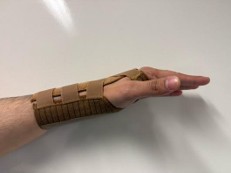 |
| (Image 1: example of wrist splint) |
|
Surgery may be recommended if:
- Symptoms are severe or long-lasting
- Symptoms do not improve with conservative treatment
The operation is called carpal tunnel release.
The most common type of carpal tunnel surgery is done as follows:
- A small cut is made in the wrist or palm
- The tight band (ligament) pressing on the nerve is released to give the nerve more space
- The cut is closed with small stitches
- It is usually done as a day case under local anaesthetic


Diagram 3: Open carpal tunnel release
Some centres offer less invasive types of carpal tunnel surgery. These are not available in all hospitals or clinics. Your surgeon will explain which option is most suitable for you.
- Many people improve with rest, splints or injections
- Surgery usually gives lasting relief, though recovery may take weeks or months
- Tingling often improves quickly
- Strength and grip may take longer to return
- Some stiffness or scar tenderness is common after surgery but usually settles
In severe cases, surgery may prevent symptoms from getting worse, but normal feeling or strength may not fully return.
If left untreated, CTS can cause permanent nerve damage and ongoing weakness.
When planning treatment, you may find it helpful to ask:
- What are my options?
- What are the pros and cons of each option for me?
- How can I get support to make the right decision?
Can carpal tunnel syndrome go away on its own?
Yes. Mild cases may improve, especially during or after pregnancy.
Will I need surgery?
Only if symptoms are severe or don’t improve with other treatments.
How long is recovery after surgery?
You can use your hand gently within days and return to activities as pain allows. Full strength may take several months to return.
Will it come back?
It’s uncommon, but symptoms can return, especially if the original cause continues.
Can I keep working with CTS?
Yes. Many people can work with adjustments or splints. Speak to a healthcare professional for advice.
Interested in getting involved? Then JOIN Hands-on (our Patient & Public Involvement Network).